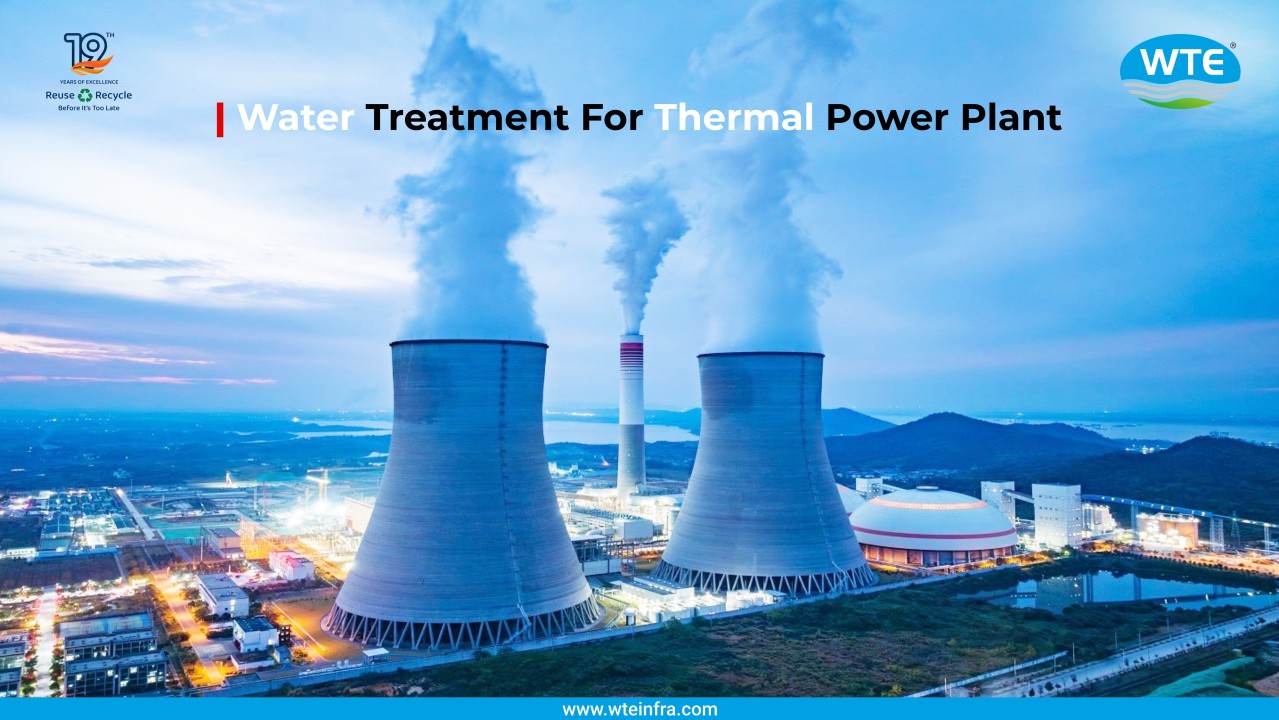
Introduction: Why Water Treatment is Crucial in Thermal Power Plants?
Thermal power plants are one of the largest consumers of water in the industrial sector. Water is used in boilers, cooling towers, condensers, and other auxiliary systems. However, untreated water contains impurities like dissolved salts, suspended solids, silica, hardness ions, and organic matter that can cause scaling, corrosion, and fouling in plant equipment.
This is where water treatment for thermal power plants becomes essential. It ensures a continuous supply of high-purity water to protect boilers, turbines, and cooling systems, improving efficiency, safety, and sustainability.
In this blog, we’ll cover:
- The importance of water treatment in thermal power plants
- Processes and technologies used (RO, DM, ETP, STP, cooling water treatment)
- Key challenges & benefits
- Future trends in sustainable water management for power plants
Importance of Water Treatment in Thermal Power Plants
Thermal power plant water treatment: Why water treatment is important in thermal power plants
- Prevents Scaling & Corrosion – Impurities like calcium, magnesium, and silica form hard scales on boiler tubes, reducing heat transfer efficiency.
- Improves Boiler Efficiency – High-purity feed water reduces fuel consumption and increases plant efficiency.
- Ensures Equipment Life – Proper treatment minimizes maintenance costs and extends the life of turbines, condensers, and cooling towers.
- Compliance with Environmental Norms – Treated wastewater reduces environmental impact and ensures regulatory compliance.
Processes & Technologies Used in Thermal Power Plant Water Treatment
1. Pretreatment of Raw Water
- Coagulation & Flocculation – Removes suspended solids and colloidal particles.
- Clarifiers & Sand Filters – Ensure clear water for further treatment.
2. Demineralization (DM) Plant
- Uses cation exchange, anion exchange, and mixed bed polishers.
- Produces ultra-pure boiler feed water.
- Removes hardness, silica, and dissolved salts.
3. Reverse Osmosis (RO) System
- Removes dissolved salts, organics, and impurities.
- Often used as pre-treatment before DM plant.
- Ensures lower operating costs and less chemical consumption.
4. Cooling Tower Water Treatment
- Involves dosing of scale inhibitors, corrosion inhibitors, and biocides.
- Prevents microbial growth (algae, slime, biofilm).
- Ensures efficient cooling and reduced water wastage.
5. Effluent Treatment Plant (ETP) & Sewage Treatment Plant (STP)
- ETP treats industrial effluents from processes.
- STP treats domestic wastewater generated within the plant colony.
- Both reduce water footprint and allow recycling/reuse.
Key Challenges in Water Treatment for Thermal Power Plants
- High water demand & scarcity in certain regions.
- Increasing TDS and silica in raw water sources.
- Rising environmental regulations for discharge.
- Balancing cost, efficiency & sustainability.
Benefits of Effective Water Treatment in Power Plants
- Increased plant efficiency & reliability 🔧
- Extended boiler & turbine life ⚡
- Reduced downtime & maintenance costs 💰
- Eco-friendly & regulatory compliance 🌱
Future Trends in Thermal Power Plant Water Treatment
- Zero Liquid Discharge (ZLD) technologies to eliminate wastewater discharge.
- AI & IoT in water treatment for predictive monitoring.
- Hybrid treatment systems (RO + EDI + UV).
- Wastewater recycling & reuse for sustainable operations.
Conclusion: The Way Forward
Water treatment is no longer just an operational need in thermal power plants – it is a strategic necessity for efficiency, sustainability, and compliance. From RO and DM plants to cooling water treatment and ZLD systems, modern solutions ensure that every drop of water is used optimally.
FAQs on Water Treatment for Thermal Power Plants
1. Why is water treatment important in thermal power plants?
Water treatment is crucial in thermal power plants because untreated water contains impurities like hardness salts, silica, and suspended solids. These cause scaling, corrosion, and fouling in boilers and turbines, reducing efficiency and increasing maintenance costs.
2. What type of water treatment is used in thermal power plants?
Common water treatment processes in thermal power plants include:
- Demineralization (DM) Plant for boiler feed water.
- Reverse Osmosis (RO) for reducing dissolved salts.
- Clarifiers and Filtration Units for suspended solids.
- Cooling tower water treatment with scale inhibitors and biocides.
- Effluent Treatment Plant (ETP) and Sewage Treatment Plant (STP) for wastewater management.
3. What is boiler feed water treatment in a power plant?
Boiler feed water treatment involves removing dissolved salts, hardness, and silica to prevent scaling inside boiler tubes. A DM plant or RO + Mixed Bed System is commonly used to ensure high-purity water suitable for high-pressure boilers.
4. How much water does a thermal power plant use?
A typical thermal power plant requires large quantities of water, primarily for steam generation and cooling towers. Depending on plant size, water consumption may range from 3,000 – 5,000 cubic meters per hour. Efficient treatment and recycling systems help reduce this water footprint.
5. What are the challenges in thermal power plant water treatment?
The key challenges include:
- High water demand vs limited availability.
- High TDS and silica in raw water.
- Stricter environmental regulations on wastewater discharge.
- Balancing cost, efficiency, and sustainability.
6. What is Zero Liquid Discharge (ZLD) in power plants?
Zero Liquid Discharge (ZLD) is an advanced wastewater treatment process where all liquid waste is recycled and reused within the plant. This ensures no effluent discharge, compliance with environmental laws, and sustainable water management.
7. How can wastewater be reused in thermal power plants?
Wastewater from ETP and STP can be treated using RO, ultrafiltration, and evaporation systems, and then reused for cooling towers, ash handling, or gardening purposes. This reduces freshwater intake and supports sustainable power generation.
👉 For thermal power plants aiming to improve performance, investing in advanced water treatment solutions is the key to long-term success. 📧 Contact us today -+91 8888889611 | enq@wteinfra.com to learn more or request a free consultation.
← Back to Blogs